Elk Creek
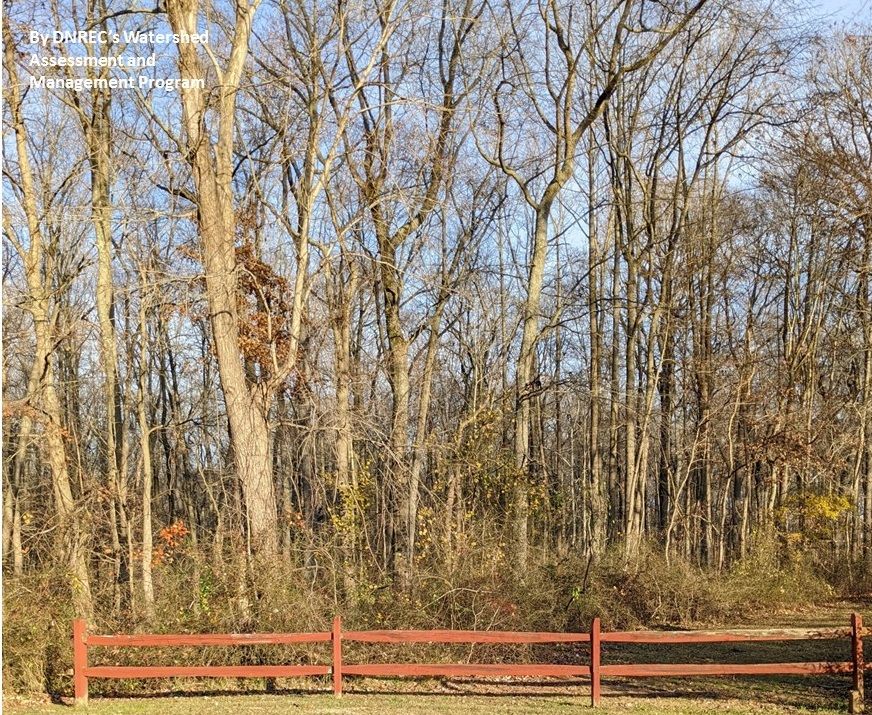
View of fence in front of trail through forest
Photo credit: DNREC’s Watershed Assessment and Management Section
Photo credit: DNREC’s Watershed Assessment and Management Section
Other watersheds in the Chesapeake Bay Basin
Square Miles (total): 105.7
Square Miles (DE): 0.4
Population (total)*: 49,315
Population (DE)*: 327
States: DE, PA, MD
Counties: DE: New Castle PA: Chester MD: Cecil
Land use† in Elk Creek
Bohemia Creek • Broad Creek • C & D Canal West • Chester River • Choptank River • Deep Creek • Gravelly Branch • Gum Branch • Marshyhope Creek • Nanticoke River • Perch Creek • Pocomoke River • Sassafras River • Wicomico
Background
The Elk River Watershed is located at the very top of Delaware’s portion of the Chesapeake Bay Basin and drains through Maryland into the northeastern portion of the Chesapeake Bay.
The majority of the land in the Delaware portion of the Elk River watershed is agricultural.
The majority of the land in the Delaware portion of the Elk River watershed is agricultural.
Water Quality
EPA established a Total Maximum Daily Load for nitrogen, phosphorus, and sediment for the entire Chesapeake Bay Watershed. This TMDL requires reductions of approximately 24% for nitrogen and 20% for phosphorus between 2009 and 2025 from all of the Chesapeake watersheds within Delaware. Sediment loads from Delaware’s portion of the Chesapeake must remain at 2009 levels under this TMDL.
Plants and Wildlife
Delaware’s Department of Natural Resources and Environmental Control (DNREC), Division of Fish and Wildlife conducts on-going inventories of natural communities as well as rare and declining species, (e.g., state and globally-rare plants, birds, insects, mussels, reptiles, and amphibians). It maintains a database, both electronic and manual, of its findings throughout the state. Learn more about the wildlife and plant communities in this watershed from the DNREC Division of Fish and Wildlife Conservation Programs.
In addition, the Division of Fish and Wildlife, working with the University of Delaware’s Institute for Public Administration – Water Resources Center, maintains online databases about plants and plant communities in Delaware. Learn more about the plant communities in this watershed from the DNREC Division of Fish and Wildlife.
In addition, the Division of Fish and Wildlife, working with the University of Delaware’s Institute for Public Administration – Water Resources Center, maintains online databases about plants and plant communities in Delaware. Learn more about the plant communities in this watershed from the DNREC Division of Fish and Wildlife.
Further Resources
For more detailed information on this watershed, its water quality and resources, check out the following resources:
Delaware TMDLs
Chesapeake Watershed Implementation Plan
Delaware Watershed Plans
Delaware Whole Basin Reports
Delaware TMDLs
Chesapeake Watershed Implementation Plan
Delaware Watershed Plans
Delaware Whole Basin Reports
Elk Creek
Elk Creek quick stats
Square Miles (total): 105.7
Square Miles (DE): 0.4
Population (total)*: 49,315
Population (DE)*: 327
States: DE, PA, MD
Counties: DE: New Castle PA: Chester MD: Cecil
*US Census Bureau, American Community Survey, 5-year estimates, 2019
Land use† in Elk Creek
†Land use source: U.S. Geological Survey (USGS), 2024, Annual NLCD Collection 1 Science Products (ver. 1.1, June 2025): U.S. Geological Survey data release, https://doi.org/10.5066/P94UXNTS.